From health.clevelandclinic.org
Focus on exercise, healthy eating and weight management to help lower your risk
Diabetes affects millions of people in the United States. So, it’s normal to wonder: Can you prevent it?
Endocrinologist Mary Vouyiouklis Kellis, MD, shares six ways to help you reduce your risk and breaks down which factors you can — and can’t — change.
Can you prevent diabetes?
Diabetes happens when your blood sugar stays too high over time. There are several types, but the main forms are Type 1 and Type 2.
Type 1 diabetes is an autoimmune disease and generally isn’t preventable. Type 2 diabetes happens when your body can’t use insulin properly. This is called insulin resistance. You can help limit this resistance with lifestyle changes.
“Several factors contribute to insulin resistance, some of which you can change, like your weight and eating habits,” Dr. Kellis says. “Preventing Type 2 comes down to lowering your overall risk.”
Here’s where to start.
6 ways to prevent Type 2 diabetes
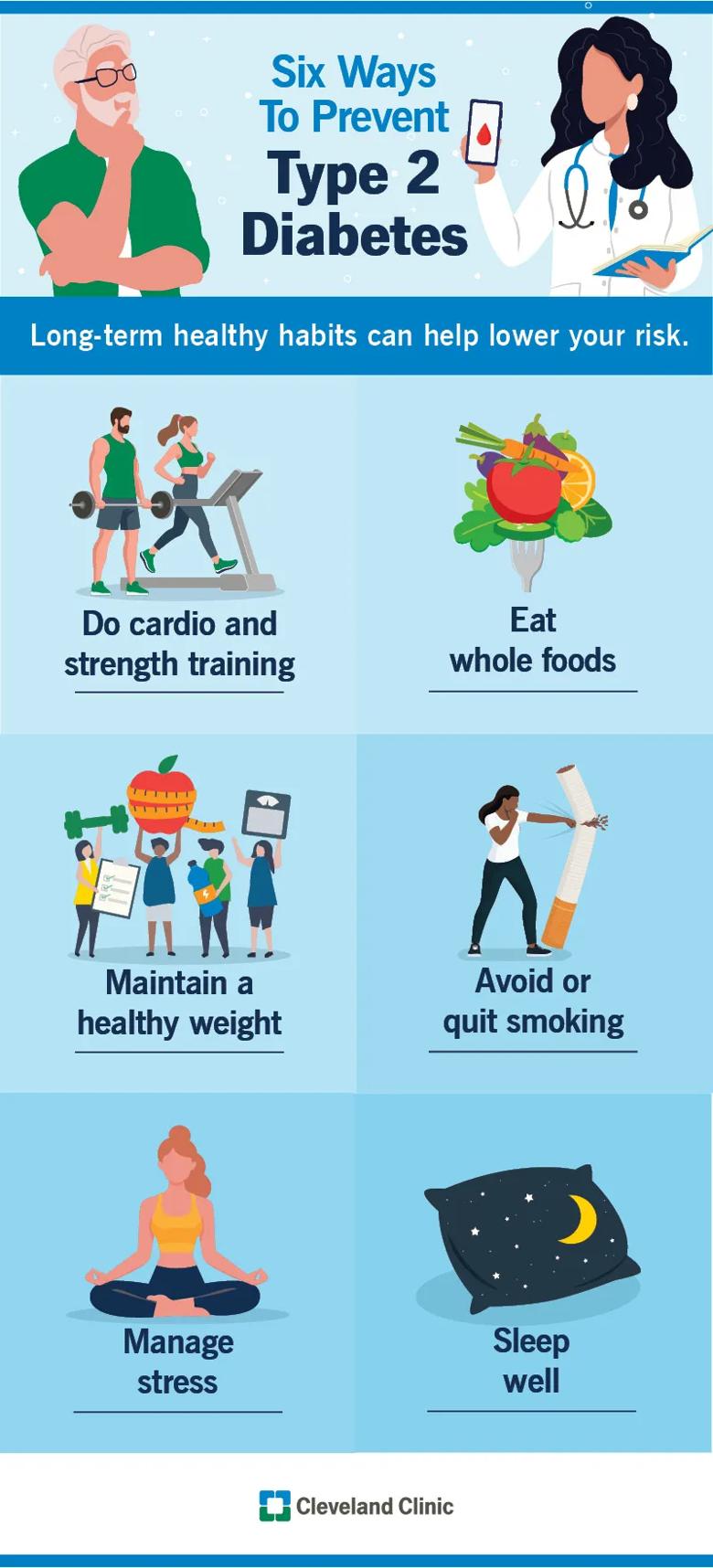
You can take steps to prevent Type 2 diabetes. Just know that it’s more of a marathon than a sprint. It involves long-term healthy habits. Dr. Kellis details the six goalposts of T2D prevention.
1. Get regular exercise
Moving your body regularly helps lower your blood sugar level in both the short and long term. It can also support a healthy weight.
“The general recommendation is 150 minutes of moderate-intensity exercise a week,” Dr. Kellis explains. “A mixture of strength training and cardio is the most beneficial.”
The key is finding forms of exercise you enjoy. And you don’t need a gym membership to do this. Activities like yard work, dancing and even lifting loads of laundry are all forms of physical activity.
2. Eat nutritious foods
What you eat can affect your blood sugar more than you might think. Some foods — especially ultra-processed ones — can cause sharp spikes. Focusing on balanced meals over time can help lower your risk.
Providers often point to eating plans like:
- The Mediterranean diet, a flexible plan that leans on fresh, plant-based nutrition
- The DASH diet, a plan that encourages less salt
- The plate method, a way of using your plate to manage food portions
Nutritious, balanced meals are beneficial for everyone, whether you have diabetes or not.
“We all need to focus on a healthier lifestyle,” Dr. Kellis notes. “Aim for meals that include a mix of protein, vegetables and complex carbs.”
3. Maintain a healthy weight
Excess body fat, especially in your belly and around your organs, makes it hard for your body to use insulin.
“Obesity is one of the most significant risk factors for Type 2 diabetes that you may be able to modify,” Dr. Kellis states.
So, what’s a healthy weight for you? It’s not the same for everyone. But two measures can help point you in the right direction: Body mass index (BMI) and waist circumference.
If you have a higher BMI or waist circumference, you can still make changes.
“Any weight loss can be beneficial to blood sugar management,” Dr. Kellis encourages. “Even losing as little as 5% of your total bodyweight can help.”
4. Don’t smoke
Smoking causes inflammation in your body, which can raise insulin resistance. Compared to people who’ve never smoked, those who smoke are nearly twice as likely to develop prediabetes.
From benefits like diabetes prevention to lowering your risk of cancer, avoiding smoking is a great way to protect your overall health.
But if you smoke, there’s still hope. About 10 years after quitting, your risk of Type 2 diabetes can drop to the same level as someone who’s never smoked.
5. Sleep well
Studies show sleeping fewer than seven hours at night is linked to increased insulin resistance.
“People often underestimate the power of a good night’s rest,” Dr. Kellis says. “It has profound impacts on many aspects of your health, including your blood sugar levels.”
Aim for seven to nine hours of sleep. The quality matters, too. If you still feel tired after hitting this target, you may have a sleeping disorder. See your provider for help.
6. Manage stress
Stress floods your body with hormones that spike blood sugar (looking at you, cortisol). A lot of stress over time increases insulin resistance.
There are a bunch of ways to manage stress, ranging from deep breathing to spending time outside. Find what works for you. If stress feels overwhelming, talk to your provider about it.
When to get help
Even if you do everything “right,” you can still develop Type 2 diabetes. That’s because some risk factors (like age, genetics and race) are out of your control.
This condition tends to develop slowly, so it’s helpful to see a provider for regular check-ups. They’ll offer screening tests to track changes in your blood sugar levels over time.
If Type 2 is unavoidable in your case, try to be kind to yourself. And know that you can still be proactive.
“The sooner you get a Type 2 diabetes diagnosis and begin management, the more likely you’ll avoid long-term complications,” says Dr. Kellis.

No comments:
Post a Comment