Showing posts with label artificial pancreas. Show all posts

Friday, 12 June 2026

'Artificial pancreas helps me live without limits'

From bbc.co.uk

A woman with type 1 diabetes has said an artificial pancreas that helps her manage her condition is "brilliant".

Chloe Hammond, 25, from Northampton, was diagnosed with diabetes as a toddler and said the technology monitored her blood sugar levels automatically, delivering insulin when needed.

Type 1 diabetes is caused by the immune system attacking cells in the pancreas that control blood sugar levels and affects about 400,000 people in the UK.

Hammond, who enjoys an active lifestyle and plays ice hockey for Milton Keynes Bolts, said the technology meant she could live "without limitations".

She has had an insulin pump since the age of 10, but benefited from an artificial pancreas when the technology was adopted by the NHS two years ago.

"I have a sensor on my arm; the pump around my waist on a belt," Hammond explained.

"It has a tube that is on a cannula on my stomach. The sensor can track my blood sugar and the pump can relay that information and give a little bit of insulin or stop it.

"The technology has come a long way from constantly carrying around needles. I just wear the device on me – it's brilliant."

Chloe Hammond said playing ice hockey was a way of showing what people with type 1 diabetes were capable of

Speaking to BBC Radio Northampton, Hammond said she enjoyed playing ice hockey and used it as a way to show what people with the condition were capable of.

"If something happens on the ice, people are aware of what it could be. Again, my teammates are thoroughly supportive – they're always checking on me," she said.

"Everyone is supportive of me being in a rough sport with the diabetes."

Hammond added: "It [diabetes] is always on your mind; you're never going to let it slip. It's permanently there for the rest of your life, but you learn to adapt with it.

"Don't let it stop you from doing anything."

https://www.bbc.co.uk/news/articles/ce8px9753zko

Monday, 30 September 2024

Thousands More U.K. Diabetes Patients To Get ‘Artificial Pancreas’

From forbes.com

Thousands more patients with Type 1 diabetes will get “artificial pancreas” technology for free thanks to deals secured by England’s public health system.

The National Health Service started rolling out the devices — which release insulin automatically in response to blood sugar levels — to certain patients in April.

More will get access to the devices this year now “cost-effective” deals have been struck with suppliers, NHS officials stated Monday. The body also announced it was giving regional health bodies £14.4 million ($18.9 million) to help them invest in the tech.

                                      A woman wears a continuous glucose monitor and an insulin pump while exercising in nature.

getty


Complicated Calculations

Insulin is crucial to the proper absorption of energy from food. The hormone moves sugar from the blood into the other cells of the body. Without it, glucose lingers in the blood, putting people with diabetes at risk of numerous complications, including heart disease, stroke, sight loss and foot disease.

People with Type 1 diabetes do not produce their own insulin and must deliver it themselves via injections or devices called pumps that deliver insulin continuously via a tube.

Calculating the right dose for a meal or to correct high glucose levels can be difficult. Patients must estimate how much carbohydrate is in their food, and take into account factors like their current glucose levels and any exercise they’ve taken (or plan to take).

Hormones, illness and numerous other factors can impact blood sugar levels. Even the temperature can affect how the body uses insulin. So people with Type 1 diabetes often take too much or too little of the hormone, sending their blood sugar levels high or low.

‘Hybrid Closed Loop’ Technology

Sometimes referred to as “artificial pancreas” technology, “hybrid closed loop” systems are made up of an insulin pump, a continuous glucose monitor and an algorithm that works out corrective doses based on glucose levels.

They can help lower overall glucose levels while preventing potentially dangerous low blood sugar incidents. But patients still need to input information like carbohydrate estimates.

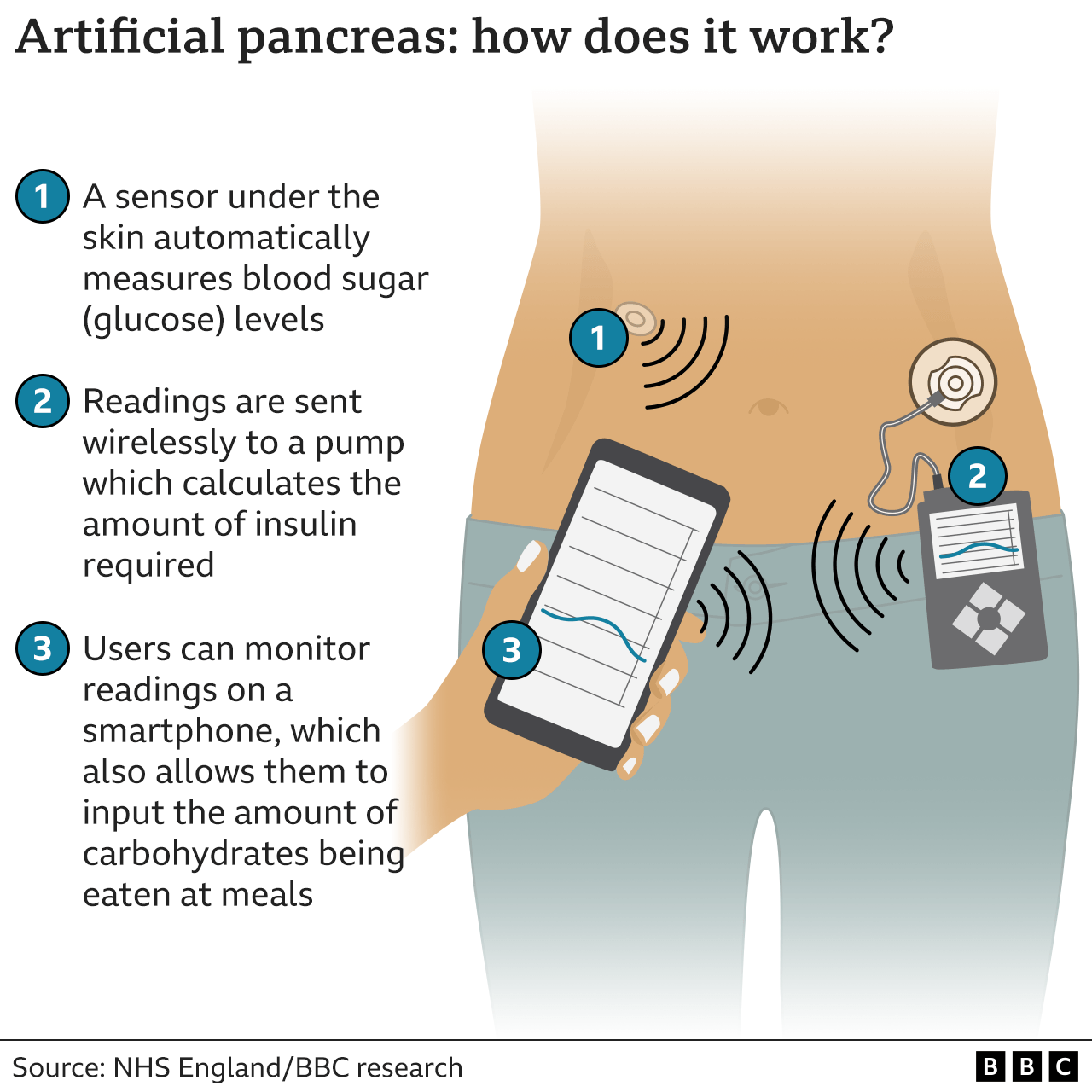
“The device detects your glucose levels, transmits the readings to the delivery system, known as the pump, which then initiates the process of determining the required insulin dosage — improving medical care but also enhances the quality of life for those affected,” said NHS Type 1 diabetes and technology lead Professor Partha Kar.

“This is a significant milestone in the national roll out of Hybrid Closed Loop systems, and is fantastic news for many people living with Type 1 diabetes.”

Who Is Eligible For ‘Artificial Pancreas’ Tech?

Around 270,000 people in England have Type 1 diabetes, but not all are currently eligible for the technology. The NHS plans to roll out the technology to many thousands of patients over the next five years.

Children and young people with Type 1 diabetes, as well as people who are pregnant or trying for a baby, are eligible for the technology. Adults struggling to keep their average glucose levels below 58 mmol/mol (7.5%), or who have “disabling” episodes low blood sugar, should also be able to access the tech.

People already using an NHS-funded insulin pump and continuous glucose monitor are eligible for an upgrade, should they want one, Prof Kar recently confirmed to his X followers.

Patients facing objections from their local hospital systems should contact him before giving up, he added.

https://www.forbes.com/sites/katherinehignett/2024/09/30/thousands-more-uk-diabetes-patients-to-get-artificial-pancreas/ 

Friday, 13 September 2024

Artificial pancreas shows promise in people with type 1 diabetes on kidney dialysis

From medicalxpress.com

Automated insulin delivery systems have, for the first time, been tested for people with type-one diabetes and end-stage kidney disease. The results found that they were safe and able to offer improvements in managing the patient's blood glucose.

An automated  delivery system (also known as an artificial pancreas) consists of an  and a continuous glucose monitoring (CGM) system with a  that works together to automatically deliver the appropriate amount of insulin dependent on the level of glucose.

This technology has been proven to improve blood sugar levels and quality-of-life for people living with diabetes. However, using such technology can be challenging for some people, such as those living with end-stage kidney disease (ESKD) that requires them to be on haemodialysis.

This is due to the impact of the disease and kidney replacement therapy, which causes problems for the body in clearing insulin and also affects glucose levels.

                                                                                      Credit: Unsplash/CC0 Public Domain

Despite these associated risks, there is very little understanding of whether automated insulin delivery is safe and effective for people with type 1 diabetes and ESKD. For the first time, a new study led by Dr. Janaka Karalliedde and his colleagues at Guy's and St Thomas Hospital tested this with four people living with type 1 diabetes on haemodialysis for ESKD.

Follow-ups after four-and-a-half months with the patients found there were significant improvements in important metrics for glucose control and the technology was able to be safely used.

Published in Diabetes Research and Clinical Practice, results showed that patients spent significantly more time in their target range of  in the blood, and a reduced amount of time spent within this target. They also showed a reduced average blood glucose, daily insulin dose, and better glucose management indicator scores—though these were not considered statistically significant.

Current research on people living with diabetes and ESKD has almost solely focused on type 2 diabetes, leaving a significant gap in our understanding of how effective and safe it is to use automated insulin delivery devices for type 1 diabetes.

Among people living with type 1 diabetes, those who also have ESKD experience the highest rates of hospitalization and A&E visits for blood sugar-level emergencies. These factors have meant that previous studies and algorithm development for automated insulin delivery haven't accounted for the experiences of such people, or other high-risk groups for people with diabetes.

"These initial results are promising and highlight the urgent need for more studies of diabetes technology in people with kidney failure who are often not included in this area of research. We hope this study can be the first step towards conducting studies that use larger, real-world data that can help us better identify how to use automated insulin delivery systems to support people living with both type 1 diabetes and ESKD," says Dr. Karalliedde, Clinical Reader in Diabetes and Cardiovascular Disease.

https://medicalxpress.com/news/2024-09-artificial-pancreas-people-diabetes-kidney.html 

Friday, 3 May 2024

Adding AI to Artificial Pancreas Enhances Efficiency, Study Finds

From newsroom.uvahealth.com

Adding advanced artificial intelligence to an artificial pancreas regulating type 1 diabetes is safe and improves the system’s efficiency, a first-of-its-kind study from the University of Virginia Centre for Diabetes Technology has found.

In the new study, UVA researchers compared an advanced experimental artificial pancreas system – which automatically monitors and regulates blood sugar for patients with type 1 diabetes – with an artificial pancreas algorithm that incorporated AI, described by the research team as a “Neural-Net Artificial Pancreas.” The AI-supported artificial pancreas kept participants’ blood sugar in the target range for an almost identical amount of time as the advanced system while significantly reducing computational demands, the researchers found. The increased efficiency could allow the developers to implement the system in devices with low computational power, such as an insulin pump, they say.

“So far, this is the first clinical trial of a data-driven artificial pancreas system, which used a extensively trained neural network to deliver insulin automatically," said Boris Kovatchev, PhD, director of the UVA Centre for Diabetes Technology. 

Enhancing the Artificial Pancreas

Fifteen adult participants with type 1 diabetes participated in back-to-back testing sessions at a hotel, using both the advanced artificial pancreas and the AI-supported artificial pancreas for 20 hours and following their daily routines as closely as possible. The AI-supported artificial pancreas system kept participants blood sugar in the target range 86% of the time, compared with 87% for the advanced artificial pancreas system. The AI-supported artificial pancreas showed greatly improved efficiency, reducing computational demands six-fold.

The AI-supported artificial pancreas “is therefore more suitable for implementation in devices with low processing power, such as insulin pumps or pods,” the researchers report in a new scientific paper.

Additional research is needed before the AI-supported artificial pancreas would be ready for use by patients. But the UVA research team hopes that incorporating AI could allow the algorithm to adapt and improve based on data from thousands of users instead of just an individual as well as to automate blood-sugar monitoring and regulation through devices with limited computing power.

“Neural-net implementation allows the algorithm to learn from the data of the person wearing the system,” Kovatchev said. “This opens the door to real-time, AI-driven personalized insulin delivery.”

Efforts to develop an AI-supported artificial pancreas builds on the earlier ground-breaking work of the UVA Centre for Diabetes Technology to create a separate artificial pancreas system that has already been approved for use by patients. Manufactured by Tandem Diabetes Care and sold as the Control-IQ system, the U.S. Food and Drug Administration has approved the system for people ages 2 and older with type 1 diabetes. 

Developing innovations to improve treatment options and better patients’ lives is a key mission for UVA Health – as outlined in its first-ever 10-year strategic plan – and for UVA’s forthcoming Paul and Diane Manning Institute of Biotechnology, now under construction at Fontaine Research Park. 

Findings Published

The AI study results have been published in the journal Diabetes Technology & Therapeutics. The article’s authors are Alberto Castillo, Elliott Pryor, Laura L. Kollar, Charlotte L. Barnett, Mark D. DeBoer, Sue A. Brown and Kovatchev. Funding for the study came from the National Institutes of Health’s National Institute of Diabetes and Digestive and Kidney Diseases, grant R01 DK 133148, and the National Center for Advancing Translational Sciences, grant UL1TR003015. Tandem Diabetes Care provided the insulin pumps used in the trial, while Dexcom Inc. provided the continuous glucose monitors. Disclosures from the researchers can be found in the paper.

https://newsroom.uvahealth.com/2024/05/02/adding-ai-artificial-pancreas-enhances-efficiency-study-finds/ 

Tuesday, 2 April 2024

UK: Diabetes patients to be offered artificial-pancreas technology

From bbc.co.uk

Tens of thousands of people with type 1 diabetes in England are to be offered a new technology, dubbed an artificial pancreas, to help manage the condition.

The system uses a glucose sensor under the skin to automatically calculate how much insulin is delivered via a pump.

Later this month, the NHS will start contacting adults and children who could benefit from the system.

But NHS bosses warned it could take five years before everyone eligible had the opportunity to have one.

This is because of challenges sourcing enough of the devices, plus the need to train more staff in how to use them.


                       The technology automates the release of insulin into the bloodstream  (Getty images)

In trials, the technology - known as a hybrid closed loop system - improved quality of life and reduced the risk of long-term health complications.

And at the end of last year, the National Institute of Health and Care Excellence (Nice) said the NHS should start using it.

Nearly 300,000 people in the UK have type 1 diabetes, including about 29,000 children.

It means their pancreas fails to produce insulin, an important hormone that helps turn food into energy.

They have to closely monitor levels of sugar, or glucose, in the blood and give themselves insulin every day of their lives, via either injections or a pump.

And this new technology does that automatically, virtually mimicking the function of a pancreas - although it still requires information on food intake to be inputted at mealtimes to work accurately.

Graphic

The new technology is intended to help prevent people with type 1 diabetes experiencing life-threatening low or high blood glucose levels, which can lead to unconsciousness and can even be fatal.

And it also helps to improve overall blood sugar control, which means the chance of complications - like heart disease, eyesight problems and kidney disease - decreases.

Scotland is also offering the technology, and Wales and Northern Ireland could soon follow suit.

Gemma Lavery, 38, from Plymouth, who is using the device after being part of an NHS pilot scheme, says it has transformed her life.

"I no longer have to worry about work-related stress affecting my blood-glucose levels, as the closed loop helps to sort this out before it becomes a problem," she says.

"I can have a full night's sleep without worrying about regular low glucose levels hindering my morning routine and I have found that my diabetes is more stable."

'Incredibly exciting'

Prof Partha Kar, NHS national speciality advisor for diabetes, said the move was "great news for everyone with type 1 diabetes".

"This futuristic technology not only improves medical care but also enhances the quality of life for those affected," he added.

NHS England diabetes clinical director Dr Clare Hambling said the technology "holds the power to redefine the lives" of people with type 1 diabetes.

She added: "Type 1 diabetes is an easily missed diagnosis, so if you are concerned about symptoms - the four 'T's - going to the toilet, passing urine more frequently, with thirst, feeling tired and getting thinner, please come forward for support."

Diabetes UK chief executive Colette Marshall said: "It's incredibly exciting to see this technology being rolled out.

"This really is a landmark moment."

Nice approved the NHS roll-out of the system last December, with the NHS later setting out a five-year plan for how to provide it for those eligible.

Nice recommends its use for those with type 1 who are in certain categories, including children and under-18s, pregnant women, and those with a HbA1c reading - a way of recording long-term blood sugar levels - of 58 mmol/mol, or 7.5%, or higher.

https://www.bbc.co.uk/news/health-68684976 

Friday, 13 January 2023

UK: New artificial pancreas technology set to change the lives of people unable to manage their type 1 diabetes

From diabetestimes.co.uk

People who are struggling to manage their type 1 diabetes are set to be offered new technology to help them control their condition with little human input.


In draft guidance, an independent NICE committee has recommended the use of hybrid closed loop systems for managing blood glucose levels in type 1 diabetes – technology that has been described as a step towards an artificial pancreas.

The technology allows a person with type 1 diabetes to go about their day-to-day life without having to monitor if their blood glucose levels are too high or too low.

If type 1 diabetes is not well controlled, people are at risk of long-term complications of hyperglycaemia, including blindness, amputations, or kidney problems.

The hybrid closed loop system comprises of a continuous glucose monitor sensor attached to the body. This transmits data to a body worn insulin pump. This uses the data to run a mathematical calculation to work out how much insulin needs to be delivered into the body to keep blood glucose levels within a healthy range.

NICE has recommended people who are unable to control their condition despite using an insulin pump, or real-time or intermittently scanned continuous glucose monitoring, are offered the technology if their long-term average blood glucose levels are indicating they are at risk of long-term complications. That is, an average HbA1c reading of 8.0% or more when the NICE guideline recommends people should aim for a HbA1c level of 6.5% or lower to minimise the risk of long-term complications from diabetes.

People who are pregnant or planning a pregnancy are also eligible, because blood glucose levels are harder to manage during this time. In total, around 105,000 people in England are set to be offered the technology.

The draft recommendations also require NHS England to agree a cost-effective price for the systems on behalf of relevant health bodies. At present an average annual cost for the technology is £5,744, which is higher than what NICE considers a cost-effective use of NHS resources.

Mark Chapman, interim director of Medical Technology at NICE, said: “Some people living with type 1 diabetes struggle to manage their condition, even though they are doing everything asked of them by their diabetes team. This technology is the best intervention to help them control their diabetes, barring a cure.

“At a time when the number of people with diabetes is rising, we have to focus on what matters most to people who use NHS services by balancing recommending the best care with value for money.”

He added: “Our committee has reviewed the real-world data generated by the NHS and evidence generated by randomised controlled trials which show there are clear benefits of recommending the technology’s use.

“We look forward to working with NHS England and industry to ensure a cost-effective price can be reached which is fair to taxpayers.”

Professor Partha Kar OBE, national specialty advisor for diabetes at NHS England, said:“This technology has been proven to give the best control for managing type 1 diabetes and should make things like amputations, blindness, and kidney problems possibly a thing of the past.

“We have seen fantastic results from the real-world trials which have taken place and thank you to NICE for their review of the evidence and subsequent conclusions. The quality of life this technology gives to those using it is huge.”

Nikki Joule, Policy Manager at Diabetes UK, said:“Hybrid closed-loop technology has the potential to transform the lives of people with type 1 diabetes, improving both clinical outcomes and their quality of life.

“NICE’s draft guidance is a promising step towards ensuring people living with type 1 diabetes in England and Wales have access to the technologies they can benefit from most, helping them to manage their diabetes, avoid complications and live well with the condition.”

She added: “Type 1 diabetes can take a huge mental toll, with people manually calculating how much insulin they need regularly throughout the day.

“By automating these calculations, hybrid closed-loop technology can greatly alleviate the emotional burden of diabetes.”

She concluded: “We look forward to it being rolled out on the NHS and will work towards ensuring that everyone who could benefit from this life-changing technology has access to it.”

At present, the standard care for type 1 diabetes involves regularly measuring blood glucose levels by using finger-prick blood testing or by using a continuous glucose monitor (real-time or intermittently scanned).

Blood glucose levels are managed with multiple daily insulin injections or by using a pump to inject insulin under the skin.

It is estimated that approximately 278,000 people in England and Wales are living with type 1 diabetes.

In type 1 diabetes, a person’s blood glucose level becomes too high (hyperglycaemia) because there is no, or very little, production of insulin by the pancreas. Blood glucose levels can only be regulated by giving insulin to prevent hyperglycaemia which is when a person’s blood glucose level becomes too high and could result in blindness, amputations, or kidney problems.

https://diabetestimes.co.uk/new-artificial-pancreas-technology-set-to-change-the-lives-of-people-unable-to-manage-their-type-1-diabetes/ 

Saturday, 11 June 2022

Beta Bionics' automated insulin pump slashes glucose levels, diabetes distress in Type 1 patients

From fiercebiotech.com

Artificial pancreases took centre stage at this year’s annual meeting of the American Diabetes Association, with Medtronic, Insulet and more touting clinical trial successes for components of their respective closed-loop insulin delivery systems.

Though much of those data represented technology already cleared by the FDA, several devices still preparing for regulatory review proved just as promising. Among these were the iLet bionic pancreas from Beta Bionics, which demonstrated meaningful drops in blood sugar levels and other Type 1 diabetes factors in a recently completed pivotal trial.

The system is already on the FDA’s radar: It was awarded breakthrough device designation in December 2019. As it closed a $57 million financing round earlier this year, Beta Bionics said it would use the funding to support its upcoming regulatory submissions to the FDA and, if cleared by the agency, the costs of its subsequent commercial rollout.

A typical artificial pancreas links an insulin pump and continuous glucose monitor—either developed by the same company, as is the case with Medtronic’s, or combining devices from two different makers in what’s known as a hybrid closed-loop insulin delivery system.

Algorithms pick up glucose readings from the CGM and use them to calculate an appropriate insulin dosage, which is then communicated to the insulin pump. The entire process is done automatically, without requiring much, if any, input from the user, thoroughly simplifying the insulin delivery process and diabetes management as a whole.

Beta Bionics’ offering is a pocket-sized device that’s equipped with algorithms to automatically dose insulin. Unlike other insulin pumps, however, the iLet system doesn’t require users to set insulin basal rates, glucose correction factors or other insulin regimen parameters, nor do they have to calculate carbohydrates at every meal to determine bolus insulin doses. Instead, the device takes into account only the user’s body weight and readings from a separate CGM, like the Dexcom G6 sensor used in the pivotal trial.

In the study, more than 400 people with Type 1 diabetes ages 6 and up either used the iLet device and Dexcom CGM or their existing insulin dosing regimen for several months. Across all age groups and insulin types in the experimental group, by the 13-week mark, average blood sugar levels had dropped about 0.5%—results comparable to those of a study Insulet presented at the conference testing its FDA-cleared Omnipod 5 insulin pump in young children.

An analysis of the study’s participants between the ages of 6 and 17 who started the study with A1C levels over 9% found that using the bionic pancreas helped improve the amount of time they spent in their ideal glucose range by more than 30%, which shakes out to about 7.5 extra hours per day spent in range.

On a more qualitative level, adults who used Beta Bionics’ technology in the study were significantly more likely than member of the control group to report drops in their diabetes distress and fear of hypoglycaemia. Similarly, parents of the study’s paediatric participants reported a higher increase in diabetes treatment satisfaction than did those in the standard-of-care group.

https://www.fiercebiotech.com/medtech/ada-beta-bionics-automated-insulin-pump-slashes-glucose-levels-diabetes-distress-type-1


Monday, 23 May 2022

Hundreds fitted with artificial pancreas in NHS type 1 diabetes trial

From theguardian.com/society

Adults and children wear device that monitors glucose level and adjusts amount of insulin delivered 

Hundreds of adults and children with type 1 diabetes in England have been fitted with an artificial pancreas that experts say could become the “holy grail” for managing the disease, in a world-first trial on the NHS. 

The ground-breaking device uses an algorithm to determine the amount of insulin that should be administered and reads blood sugar levels to keep them steady. The NHS trial has so far found the technology more effective at managing diabetes than current devices and that it requires far less input from patients.

Managing type 1 diabetes can be challenging, especially in young children, owing to variations in the levels of insulin required and unpredictability around how much patients eat and exercise. Children are particularly at risk of dangerously low blood sugar levels (hypoglycaemia) and high ones (hyperglycaemia), which can damage the body or even lead to death.

Now a new artificial pancreas worn next to the body – which continually monitors blood glucose levels and automatically adjusts insulin delivered via a pump – is being tested in 30 NHS diabetes centres. About 875 people have benefited so far in the first nationwide study of its kind in the world.

The technology can eliminate finger-prick tests to check blood sugar levels and prevent hypoglycaemic and hyperglycaemia attacks. Although most of the NHS’s estimated £10bn annual spending on diabetes treatment goes on type 2 diabetes, it is also hoped the devices will help cut costs by ensuring less need for interventions for type 1 cases.

“Having machines monitor and deliver medication for diabetes patients sounds quite sci-fi-like, but when you think of it, technology and machines are part and parcel of how we live our lives every day,” said Prof Partha Kar, the NHS national speciality adviser for diabetes.

“A device picks up your glucose levels, sends the reading across to the delivery system – AKA the pump – and then the system kicks in to assess how much insulin is needed. It is not very far away from the holy grail of a fully automated system, where people with type 1 diabetes can get on with their lives without worrying about glucose levels or medication.”

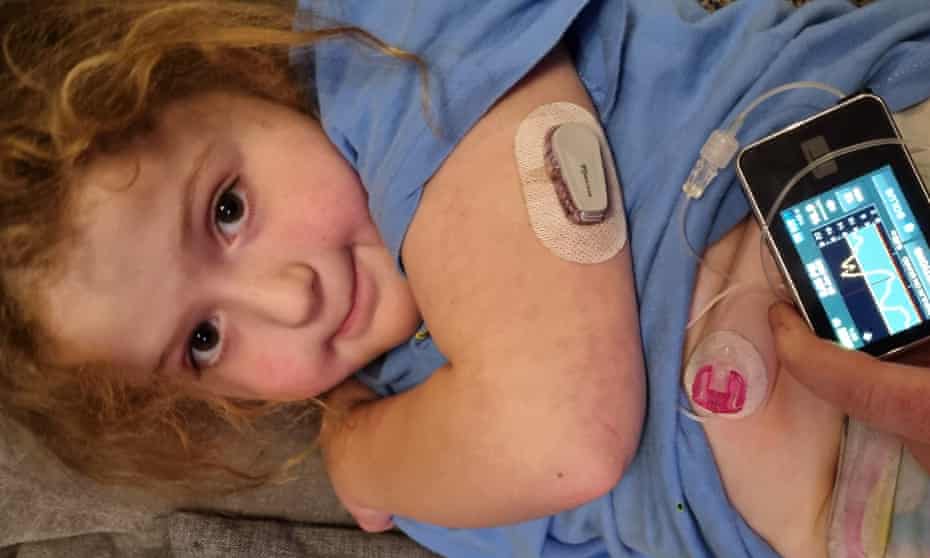
Charlotte Abbott-Pierce, six, was diagnosed just over a year ago and initially started on insulin injections but has now become one of the first people to benefit from an artificial pancreas.

She has been fitted with an insulin pump and a continuous glucose monitor that, as part of the world first pilot, now work together.


Charlotte Abbott-PierceCharlotte Abbott-Pierce, six, has become one of the first people to benefit from an artificial pancreas. Photograph: NHS


Her mother, Ange Abbott-Pierce, said: “Before the hybrid closed loop system was fitted, my husband and I would be up every two hours every night having to check Charlotte’s blood sugars and most times giving insulin, sometimes doing finger pricks or dealing with ketones due to quick rises in blood sugar.” She said the new system was a “godsend to us as we were at our wits’ end with worry, not being able to catch the highs before they got dangerous”.

Chris Askew, chief executive of Diabetes UK, said: “This technology has the potential to transform the lives of people with type 1 diabetes, improving both their quality of life and clinical outcomes.”

The data collected from the pilot, along with other evidence, will be considered by the National Institute for Health and Care Excellence when it looks at rolling the device out more widely.

Separately, new research on Friday reveals that even slim people can get remission from type 2 diabetes by managing their calorie intake.

A trial led by Prof Roy Taylor of Newcastle University found 70% of participants with a low body mass index (BMI) went into type 2 remission thanks to diet-controlled weight loss, despite not being obese or overweight. Obesity raises the risk of type 2 diabetes, but 10% of sufferers have lower BMIs.

His previous landmark research gave hope to millions of type 2 diabetics who were overweight by showing it was possible to go into remission through careful weight loss. It showed that shedding fat from inside the pancreas and liver – the two key organs involved in blood sugar control – was key to remission from type 2 in people living with obesity or being overweight.

Now researchers have found it also works for slimmer diabetics – with a BMI at or just above the healthy range, below 27. Taylor said: “This is very good news for everyone with type 2 diabetes.”

https://www.theguardian.com/society/2022/apr/01/hundreds-fitted-with-artificial-pancreas-in-nhs-type-1-diabetes-trial