Tuesday, 4 April 2023

Vitamin B1: why it's important and how to get more

From restless.co.uk

The human body relies on 13 different vitamins to function properly. Of these, eight are B vitamins, which are involved in brain health, cognitive function, and the nervous system. However, vitamin B1 arguably plays one of the largest roles in our everyday lives.

Here, we’ll explain exactly what vitamin B1 is, why it’s important, and how to make sure you’re getting enough.

What is vitamin B1?

What is vitamin B1

Vitamin B1, also known as thiamin or thiamine, is one of the eight essential B vitamins. It plays a key role in several important health functions including energy production, growth, development, and cellular function. All body tissues require vitamin B1 to function properly.

Like all other B vitamins, thiamine is water-soluble. This means it dissolves in water and therefore isn’t stored in the body – so you need to consume it on a daily basis to stay healthy. In fact, research shows that the body can store only 20 days’ worth of thiamine at any given time.

Why is vitamin B1 important for health?

Why is vitamin B1 important for health

Vitamin B1 is an essential vitamin because it’s involved in the normal functioning of the heart, kidney, liver, brain, and skeletal muscles – among other things.

Some of the most impressive health benefits of vitamin B1 include…

Vitamin B1 is important for a healthy metabolism

Vitamin B1 plays an important role in energy production because it converts carbohydrates that we eat into glucose, which is the body’s preferred source of energy to keep our metabolism running smoothly.

Our bodies also need vitamin B1 to create adenosine triphosphate (ATP) – the body’s main energy-carrying molecule.

Vitamin B1 can boost our immune system

Because of its involvement in various health functions, vitamin B1 is key in boosting the immune system.

For example, B1 plays a role in maintaining muscle tone along the walls of the digestive tract, where a significant percentage of our immune system is located. A healthy digestive tract means the body receives all of the nutrients that it needs to boost our immunity and helps to prevent us from falling sick.

According to studies, vitamin B1’s effect on the immune system can reduce the risk of various health conditions like heart disease, type 2 diabetes, kidney disease, cancer, mental illnesses, and neurodegenerative disorders like Alzheimer’s.

Vitamin B1 can protect and boost brain function

Research has found that deficiency in B1 can have a negative impact on the cerebellum – the region of the brain responsible for various cognitive functions including attention, language, fear regulation, and procedural memory.

Procedural memories are memories of skills learned by repetition that become subconscious – for example, driving a car or riding a bike.

However, upping your intake of vitamin B1 has been shown to improve brain-body connection and protect against a form of brain damage known as Cerebellar Syndrome, which affects the cerebellum.

It does this by supporting the development of the myelin sheath – an insulating layer made of protein and fatty substances that wraps around nerves to protect them from damage.

B1 has also been noted for its ability to improve brain function – particularly concentration and memory.

Vitamin B1 may help to treat and prevent Alzheimer’s disease

In more recent years, it’s become clearer that diet and lifestyle play a significant role in the development of Alzheimer’s disease. And according to experts, making sure that your diet contains enough B vitamins is one of the most important dietary decisions you can make when it comes to preventing the disease.

Vitamin B1 plays a key role in this because the brain needs it to turn glucose into energy and without energy, brain cells will begin to die. The brain also needs B1 to make acetylcholine – the main neurotransmitter that Alzheimer’s patients are deficient in.

Research has suggested that sufficient intake of vitamin B1 could help to treat – or slow down and prevent – memory decline associated with Alzheimer’s.

Vitamin B1 can help support people with diabetes

The body needs vitamin B1 to convert carbohydrates into glucose, so having low levels of B1 can impact glucose control. This explains why levels of vitamin B1 are lower in diabetic, because high blood sugar causes the kidneys to excrete the vitamin at a rate 25 times higher than normal.

As a result, science has revealed that people with type 1 and type 2 diabetes have around 75% lower levels of vitamin B1.

However, there’s evidence that increased intake or supplementation of vitamin B1 could help to reverse microalbuminuria, which is a common complication of diabetes and an early sign of kidney disease where albumin protein passes through the kidneys and into the urine.

For example, in this study, taking an oral B1 supplement decreased the levels of albumin protein in the urine, and after three months of treatment, 35% of participants had normal urine levels.

Vitamin B1 can help reduce the risk of heart disease

Our entire cardiovascular system relies on vitamin B1 to function properly and remain healthy. This is because B1 plays a role in the production of the neurotransmitter acetylcholine, which is responsible for transferring messages between muscles and nerves – ensuring heart function.

For example, in this study, when B1 was given to people suffering from congestive heart failure intravenously for seven days, they experienced considerable improvements in heart function. This suggests that the vitamin could help to prevent the development of heart disease.

Other studies have suggested that vitamin B1 could delay the progression of heart failure and improve survival and healing after a heart attack.

Vitamin B1’s role in helping treat diabetes should also be noted here, as according to science, adults with diabetes are two to four times more likely to die from heart disease. But, research has revealed that vitamin B1 could help to reduce the risk of heart disease caused by diabetes.

Vitamin B1 can help combat stress, anxiety, and depression

Like other B vitamins, B1 is sometimes called an ‘anti-stress’ vitamin because it can help to boost the immune system and improve our ability to withstand stressful situations.

This is largely down to B1’s ability to decrease and regulate oxidative stress (the imbalance of antioxidants and harmful molecules known as free radicals, which causes inflammation) in the body. This is significant because oxidative stress is linked with emotional stress.

For example, this study of older adults with generalised anxiety disorder (GAD) found that they all had low levels of B1 in their blood. However, having daily injections of vitamin B1 was found to improve anxiety and general wellbeing.

Vitamin B1 has also been shown to boost mood and help combat depression. For example, in this study, B1 helped reduce symptoms of major depressive disorder and prevent mood swings related to work stress.

Vitamin B1 supports eye health

Research has suggested that vitamin B1 can support eye health and help prevent conditions like cataracts and glaucoma. In both cataracts and glaucoma, there’s a loss of muscle and nerve signalling between the brain and eyes.

Vitamin B1 helps to stimulate the connection between the eyes and brain. And when taken alongside other essential nutrients, B1 can help to prevent damage to the optic nerve – a condition that often leads to vision loss.

For example, this study of 2,900 people found that a diet high in vitamin B1 reduces the risk of developing cataracts by 40%.

Vitamin B1 can help improve digestive health

Vitamin B1 plays an assistive role in the production of hydrochloric acid (stomach acid), which is essential for the proper breakdown and absorption of food.

Research has found that B1 helps to maintain muscle tone in the stomach and intestines, and prevent constipation. It also nourishes the digestive organs, regulates appetite, and helps the body get maximum nutrition from food.

How can I get enough vitamin B1?

How can we get enough vitamin B1

Vitamin B1 isn’t stored in the body, so it’s important to get a continuous supply through your daily diet. According to the NHS*, men and women need 1mg and 0.8mg of vitamin B1 a day, respectively.

B1 is found in both plant and animal-based foods but animal foods like meat, poultry, and shellfish tend to contain slightly more. Grains are good sources of vitamin B1, but it’s best to consume them in their whole, unprocessed form.

Some vitamin B1-rich foods include…

  • Pork (0.7mg per 100g)
  • Flax seeds (1.6mg per 100g)
  • Salmon (0.3mg per 100g)
  • Green peas (0.3mg per 100g)
  • Mussels (0.3mg per 100g)
  • Asparagus (0.3mg per 100g)

Other foods high in B1 include beef, tuna, trout, beans, lentils, sunflower seeds, sweet potato, chicken, oranges, and whole grains.

Vitamin B1 is also added to other foods through fortification – for example, in pasta, bread, rice, fortified breakfast cereals, and flour.

Most people are able to get sufficient amounts of thiamine from their diet but for those who need it, thiamine is also available to buy as a supplement.

However, if you want to start taking a supplement, it’s important to speak with your doctor first as over consumption of vitamin B1 can be dangerous. To maintain a healthy balance of B vitamins in your system, health professionals often advise healthy adults to take B complex vitamins over individual B supplements.

What are the symptoms of vitamin B1 deficiency and who’s at risk?

Not consuming enough vitamin B1 can cause deficiency. This can happen in as little as three weeks and can begin to affect the heart, immune system, and nervous system.

Vitamin B1 deficiency is fairly uncommon in healthy adults with access to B1-rich foods. However, there are certain factors that can increase your risk.

This includes…

  • Certain medical conditions, such as alcoholism, Crohn’s disease, and anorexia, which can impair healthy vitamin B1 levels.
  • People undergoing dialysis for their kidneys or taking loop diuretics have an increased risk of vitamin B1 deficiency because these procedures can release thiamine from the body and cancel out any health benefits.
  • Particular foods and dietary habits, such as drinking a lot of tea or coffee (including decaf), eating a lot of raw fish and shellfish, and chewing on tea leaves or betel nuts, can cancel out the body’s use of vitamin B1 and increase the risk of deficiency.

Signs of vitamin B1 deficiency can be easy to overlook as they can be vague or mimic symptoms of other conditions.

Some of the most common symptoms include…

  • Headaches
  • Loss of appetite
  • Irritability
  • Fatigue
  • Depression
  • Abdominal discomfort
  • Nausea and vomiting

Having very low vitamin B1 levels can also lead to serious health issues like beriberi and Wernicke-Korsakoff syndrome.

Beriberi is caused by a build-up of pyruvic acid in the bloodstream – a side-effect of the body not being able to turn food into energy. The condition affects breathing, heart function, eye movements, and alertness.

Wernicke-Korsakoff syndrome is a combination of two separate disorders. Wernicke’s disease affects the nervous system and can cause a lack of muscle coordination, visual impairment, and mental decline. If left untreated, Wernicke’s disease can lead to Korsakoff syndrome, which permanently impairs memory function in the brain.

Both diseases can be treated with vitamin B1 supplements or injections. But while this can help with vision and muscular issues, B1 can’t mend any permanent damage caused by Korsakoff syndrome.

Final thoughts…

We all want to do what we can to stay healthy – and making sure we’re getting enough essential vitamins and minerals is an important way to do this.

Vitamin B1 is one of these essential nutrients and it brings many health benefits, including a reduced risk of heart disease and boosted mood.

For more information on essential vitamins and minerals, head over to the diet and nutrition section of our website.

https://restless.co.uk/health/healthy-body/an-introduction-to-vitamin-b1/?contact_id=5e74dd65-8bd7-48a2-a626-ded9a62b692b&utm_campaign=23-04-04&utm_source=monday-email&utm_medium=email&utm_content=monday-email-general-23-04-04&bsft_clkid=6ad0e671-91ac-4f0c-9024-5719c38029fe&bsft_uid=7e4bbf6c-1c5d-4033-98b6-b63187fc0584&bsft_mid=b3440032-5ac6-49d9-bade-e2bc13a0a51d&bsft_eid=dbaeb13f-1c96-43ed-9fcf-f275b769ed7b&bsft_mime_type=html&bsft_ek=2023-04-04T05%3A31%3A04Z&bsft_aaid=3fb5a0c8-1d80-4f30-8749-7b9799f02c6c&bsft_lx=5&bsft_tv=16

Create Lasting Habits When Living With Diabetes

From diatribe.org

One of the best approaches to developing new habits is to start small and build upon successes over time. This way, you can make lifestyle changes and create new habits that last.

Goals such as eating healthier, getting more exercise, and taking better care of ones' self are common. Unfortunately, so is giving up on goals that feel unsustainable or unachievable. Most people fail at diet and lifestyle resolutions because they set unrealistic goals and need more support as they strive to improve their health.

One of the best approaches to developing new habits is to start small and build upon successes over time. This way, you can make lifestyle changes and create new habits that last.  

Changing Health Behaviour

Health behaviours, which are any actions or habits that contribute to maintaining, restoring, or improving overall health and wellness, are essential for managing diabetes. Some key diabetes health behaviours include self-monitoring blood glucose levels, eating a balanced diet, engaging in regular physical activity, taking medications as prescribed, and getting regular check-ups with a healthcare provider. 

By adopting these behaviours, individuals with diabetes can better manage their disease, reduce the risk of complications, and achieve positive mental and physical health. 

"Behaviour change is important in diabetes care because it can lead to improved disease management, a better quality of life, and enhanced self-care and self-management skill," said diabetes specialist Megan Warnke, who lives with type 1 diabetes.

However, despite the benefits of adopting diabetes health behaviours, research shows behaviour change is  challenging. 

"Behaviour is difficult to change because most of us try to make too many changes at once," said Dr. Lakeisha Gatling, a psychologist in Houston. "In addition to making too many changes at once, we may also get trapped in thinking patterns such as all or nothing thinking, blaming, or negative mental filtering, which keeps us ‘stuck’ in maladaptive patterns of behaviour which can prevent or delay change."

According to Dr. BJ Fogg, behaviour scientist at Stanford University and author of “Tiny Habits: The Small Changes that Change Everything,” behaviour change does not have to be overwhelming or daunting. 

In “Tiny Habits,” Fogg introduces a simple and practical approach to behaviour change. He suggests you start with a goal you want to achieve, break it down into small, achievable steps and identify where each step fits naturally in your life. Then, make sure you're taking the time to nurture each step, give yourself positive reinforcement for making progress, and celebrate when you reach milestones. 

With enough practice and dedication, you'll eventually be able to make the behaviour a part of your life. It will come naturally without relying on willpower or motivation alone. And that's where habit stacking comes in.

What is Habit Stacking?

Habit Stacking

Habit stacking is a behaviour change method created by Fogg that involves connecting an old habit to a new one. The habit stacking strategy is similar to behaviour change plans that outline how, when, and where to perform a behaviour. 

However, habit stacking differs because you link the new behaviour to another habit instead of a specific time and place. 

Here's the habit stacking formula: after/before [current behaviour], I will [new habit]. 

For example: After I pour my cup of coffee each morning, I will meditate for one minute, or After I order at a restaurant, I will ask the server to put half the entre into a "to go" box.

Stacking habits can be approached in several ways, and the great news is that you are not limited to a single method of habit stacking.

The Chain Method

"The chain method involves linking a new habit to an old habit," Warnke said. 

For example, you want to start eating healthier snacks, so you chain it to an existing habit like preparing lunch for work. "Every time you prepare lunch for work, you portion out nuts to take for a snack," she said. 

Using the formula the chain would read: After I prepare lunch for work, I will portion out nuts for a snack.

The Sequence Method

Sequencing involves doing a series of existing, related habits in order and adding a new one. 

For example, if you're looking to increase your physical activity, Warnke suggested this type of sequence: After I wake up and turn the shower on, I will perform 20 squats [the new habit], and then take a shower. 

The Pairing Method

The pairing method involves combining two habits, so they happen at the same time. This method is particularly effective when you use temptation bundling — linking a pleasurable behaviour with an action you need to do. 

For example, if your goal is to be more physically active and you love listening to your favourite playlist, Warnke advised that you pair the two activities. "Listen to your favourite playlist [existing pleasure] while out for a run [new behaviour]," she said.

 Healthy Habit Stacking Ideas - After/Before [Current Behaviour], I Will [New Habit]

Methods

Drink More Water

Prep Veggies

Eat Healthy Snacks

Count Carbs


Chain 

brush teeth + fill a water bottle 

make a sandwich + slice cucumbers

put groceries away + portion out nuts for snacking 

prepare breakfast + count carbs


Sequence 

wake up > make coffee > drink water 

make dinner > prep extra vegetables > pack for next day's lunch

pick up kids from school > eat an orange with nuts > make dinner 

put groceries away + portion out trail mix + label with carb count


Pairing

while answering emails 3x per day, drink water 

while watching Sunday night football, prep vegetables for week  

while doing Wordle daily, eat apple 

while watching the 10:00 nightly news, count carbs for the next morning’s breakfast 

How to Start Stacking

Identify a trigger. Identifying a trigger is an essential first step in habit stacking. A trigger is an action or event that helps remind you to carry out your desired behaviour, and it will usually come from an existing daily routine. Selecting triggers that are already part of your daily routine makes remembering and acting upon them easier. So start by creating a list of your current habits.

 "The key is to find a behaviour or habit that you already have almost on autopilot and then add a new one to it," says diabetes educator Vandana Seth. "For example, one of my clients struggled with drinking water throughout the day. We discussed the idea of drinking at least one glass first thing in the morning. Since he loved having his cup of coffee first thing in the morning, I asked him to consider keeping a glass of water right by the coffeemaker, and while the coffee was brewing, he drank his glass of water. After doing this consistently for a week, he began to look forward to his glass of water.”

It's also essential to ensure your trigger aligns with your new habit. "If you're trying to remember to take your diabetes medication with breakfast every morning but only eat breakfast on the weekend, that habit will only happen on the weekend," Warnke said.

Select a new habit. Start by stacking one new habit with an already established one and perform the stack for one or two weeks. Once you've got the hang of it, add another habit to your stack. "Pick one or two new habits you'd like to work on. Trying to change everything all at once can be overwhelming and make you less likely to be successful," Warnke said.

Be specific. Whenever setting new goals or habits, try to be as specific as possible. “For example, wanting to exercise more is a good intention, but it doesn't really explain how or when you will exercise more,” Warnke said. “Instead, think about what exercise you'd like to do, how much time you can realistically spend doing it, and what days or times would work best.”

Don't be afraid to experiment! Trying different habits or stacking them differently can help you find the most beneficial and sustainable routine. It's also important to track your progress and reflect on the habit-stacking process, so you can determine what works best for you. 

Aim for progress, not perfection. It is important to remember that striving for perfection can be counterproductive when it comes to lifestyle changes. Instead, focus on making progress and celebrating small wins. It can take anywhere from a few weeks to several months for a habit to become automatic. “Changes aren't going to happen overnight,” Warnke said. “However, the small things you do every day to improve your health will lead to significant changes in the long run.”

Create accountability. For even more success with habit stacking, involve your diabetes support team. A support system can make all the difference in helping you stick with your lifestyle goals. "Accountability and support play a key role in using habit stacking and seeing sustainable results," Sheth said. "Dietitians can help guide clients with this process and collaborate on creating a structure to the old and new habits to build consistency with healthy eating as well as monitoring blood glucose.”

Finally, be patient. "While habit stacking may make it easier to maintain a habit, changes to lab results, diabetes symptoms, and weight still take time," Warnke said. Lifestyle behaviour change can be challenging, but it doesn't have to be overwhelming. Habit stacking is an approach that can help you set realistic goals and develop new habits that have the potential to improve your diabetes management and the quality of your life.

https://diatribe.org/how-to-create-lasting-habits-with-habit-stacking-when-living-with-diabetes 

Monday, 3 April 2023

Diabetes History Has Present-Day Implications

From nihrecord.nih.gov

A century ago, the first human received an insulin injection. Thanks to insulin, type 1 diabetes is survivable and manageable, but a new challenge arose: many now face serious diabetes-related complications. A historian recently discussed these different sides of diabetes and raised some often-overlooked questions that reverberate in today’s world. 

“Broader questions of race, environment and technology help inform how we might understand the complications of diabetes,” said Dr. Richard Mizelle, Jr., associate professor of history at the University of Houston, who recently delivered the 14th annual James Cassedy Memorial Lecture in the History of Medicine at the National Library of Medicine (NLM).

                                                                 Dr. Richard Mizelle, Jr.

“Much of my work deals with physicians, but also with other health professionals who have largely been ignored by historians, including nurses, dietitians and nutritionists,” said Mizelle. “Black people, particularly in rural parts of the country, were much more likely to come into contact with a nurse rather than a physician.”

An estimated 37 million people in the U.S. are living with diabetes. Some 500,000 are on dialysis and more than 8 million require insulin to live. A major cause of kidney failure, heart attacks, stroke, blindness, neuropathy and limb amputation, diabetes still disproportionately affects people experiencing poverty, African Americans and other minorities. 

Race, Health & Environment

A focus of Mizelle’s research, and the subject of a teaching module he developed for NLM, is the intersection of disease with environment and policy. 

People with low socioeconomic status and seniors are particularly vulnerable to extreme temperatures, natural disasters, contamination from toxic dumping and other environmental exposures. 

Last year was the 40th anniversary of the Warren County, N.C., protests, in which a small, predominantly Black community objected to becoming a landfill site for toxic waste. It was the first large-scale environmental protest in U.S. history.

Other examples Mizelle cited were more recent. The 1995 heat wave in Chicago highlighted vulnerabilities of those with a lower or fixed income. On the South Side, dealing with extreme temperatures, the elderly were encumbered by the elements, such as uneven, cracked sidewalks. Many stayed in and died in their apartments, unable to afford air conditioning.

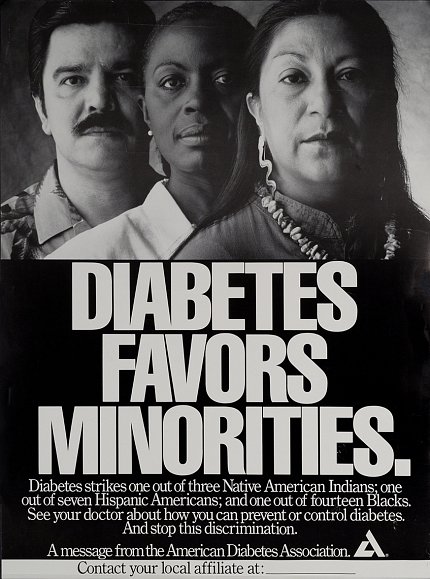
A poster shows 3 people: a Native American woman, an African American woman and a Hispanic man. In large letters, it reads: Diabetes Favors Minorities.

A historical poster states that minorities are at higher risk for diabetes. The tagline reads: “See your doctor about how you can prevent or control diabetes and stop this discrimination.”

PHOTO: AMERICAN DIABETES ASSOCIATION/NATIONAL LIBRARY OF MEDICINE COLLECTION

In 2005, Hurricane Katrina tore through Gulf states calling attention to the difficulties of evacuating patients from hospitals, particularly those on dialysis, and moving people with amputated legs or serious health conditions to safety.

Even a seemingly harmless skin break could be dangerous in such a disaster. “People had to wade through toxin-filled waters to the Superdome or other shelters,” Mizelle said. “Complications from skin breaks could turn deadly if not treated in a timely way.”

Diseases such as diabetes and asthma adversely affect people who are poor and those without insurance, who frequently die from these otherwise manageable conditions. 

Consider diabetes not only as a chronic disease, he said, but also as being interconnected with “where people live, what policies are at play and how we as a society are thinking about this vulnerability that people are dealing with.”

The Stroke Belt

Since the 1940s, some southern states have had much higher incidence of diabetes, kidney failure and heart disease. This “stroke belt” sheds light on the urban-rural divide.

Out of more than 1,200 dialysis clinics in Alabama, Georgia, Louisiana, Mississippi and the Carolinas, only 104 are not-for-profit, or hospital-based, which tend to provide better care and resources. Most of these not-for-profit clinics are in White, urban, affluent areas, noted Mizelle, which means the for-profit industry largely targets poor Black and minority areas.

“It becomes difficult in many ways for individuals located in these deep south states to access dialysis and [other] resources required to manage their illness,” he said. 

Amputations

About 140,000 people in the U.S. have diabetes-related amputations each year. Black people are three to four times more likely to endure them. 

“By the time someone needs an amputation,” Mizelle said, “the body has been ravaged to a point that there are likely other health issues going on related to diabetes, including heart failure.”

And yet, Black people also have much lower rates of angiogram screening, which could help prevent heart failure. One strategy that can prevent amputation is revascularization surgery, which can open blocked vessels going down to the legs.

“But the medical system in many ways bends toward amputations first,” he said, “and that is a problem we as a society must face and take on.”

In low-income communities, amputations are twice as likely, due to the high cost of insulin, lack of health insurance and lack of access to specialists. Many areas even lack hospitals, and small clinics usually are not equipped to do revascularization surgery.

Amputees face unique hurdles, often contending with limited employment options and reduced self-sufficiency. A distinct stigma though comes with having an amputated limb and being Black, said Mizelle. Non-White people, for example, have a tough time finding an artificial limb that matches their skin colour.

“And a chronic invisibility comes with dialysis,” Mizelle noted. People disappear for hours, several times a week for treatment. “But we don’t talk about dialysis the way we talk about other forms of chronic disability and those questions are important and connected to a much longer history.”

When Disasters Collide

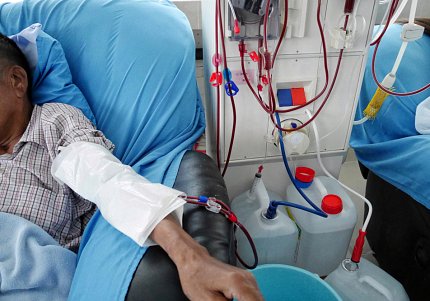
The arm extended of a patient in a hospital bed with protruding wires from the dialysis machine.

A patient in the hospital on dialysis

PHOTO: KHAWFANGENVI16/SHUTTERSTOCK

“From the beginning, those of us who work within the realm of public health and the history of medicine understood that Black people and minorities and socio-economically depressed groups would suffer disproportionately from the Covid-19 pandemic,” Mizelle said.

“Even during the height of the shutdown, people on dialysis had to go to their dialysis clinic [multiple] times a week, no matter how far, regardless of how many buses they had to take…because this was life or death.”

In fact, many diabetes clinics were shut down during the pandemic, which has led to more long-term damage and heightened amputations, particularly among certain groups.

“We see this narrative, a moment in which disasters collide, in a number of ways over the last century,” he said.

A Matter of Access

Mizelle urged historians and researchers to put on their policy hats and work with public officials to help more people better manage, and potentially prevent, diabetes and its complications. 

For one, revamp neighbourhoods and public spaces—parks, walking paths, free exercise equipment, trees, fresh air. 

“All of these things [not only] make for a healthy environment,” he said, “but also help people deal with disease and, importantly, help to prevent disease.”